|
The Feel-Good Guide to Sports, Travel, Holidays & Entertainment
|

| Main | Sports Events | Holidays & Observances | Pop Culture | Travel |
|
Main
—
Mosquito Bites —
Lately, the fear of mosquito-borne diseases like West Nile Virus has increased awareness of the fact that these buzzing pests love damp, marshy places with standing water where they can breed. Lakes, rivers, or marshlands near the ocean are wonderful climates for mosquitoes. Don't think that a hike in the mountains or forests means a mosquito free experience. The damp leaves and standing water that keeps the trees green provide lots of spaces where mosquitoes can find a home. What's a mosquito bite? Mosquitoes are designed to get their protein in liquid form. When the little insect stabs her victim with that needle-like mouthpart, she injects a liquid containing digestive enzymes and anticoagulants to season her meal. The proteins in this liquid are the cause of the allergic reaction we call a mosquito bite. Why does it itch? The first bite doesn't cause any reaction, but it does sensitize the body to the foreign proteins. The next few bites are the worst as the body fights the invading proteins. Babies and young children often experience more redness and swelling when they get bitten. In most cases, as time passes and more mosquito bites come and go, the immune system begins to get less sensitive and the bite will cause less irritation. Some people become so desensitized that they become "immune" to the itchy bites. Others develop greater sensitivity with every bite. Don't scratch It's hard not to scratch an itch, but in the case of a mosquito bite, scratching just causes more irritation. Your immune system interprets that as a call for more antibodies to fight the foreign proteins. The more you scratch, the more it will itch and the longer it will take to go away. When you rub and scratch you also risk breaking the skin, resulting in an infection or a scar. What you can do to prevent mosquito bites
There are plenty of bug repellents, some with sunscreen and some without, that will make your skin unattractive to a hungry mosquito. Doctors recommend finding one that includes DEET, which repels both ticks and mosquitoes. DEET is approved for children over 2 months old, but check with your pediatrician before using any products containing toxic substances on your children.
Wearing sweet scents — either perfumes or after shaving lotions — seems to attract more mosquitoes. Many people believe that rubbing down with vinegar, onion juice or garlic prevents getting bitten, but then you smell like garlic, onions or vinegar and mosquitoes may not be the only ones who want to avoid getting anywhere near you! A number of gardeners also swear by a plant to help repel mosquitos called the American beautyberry. Although folklore is full of homemade remedies that are said to repel the backyard pests, this one has some scientfic research to bolster claims that it actually works. Other plants that are said to work to help repel mosquitoes include marigolds, rosemary and, surprisingly, catnip. Try
these tips to help with itch
There are plenty of itch reducing creams and lotions on the shelves of your local drug store. Calamine lotion is an old stand by, but there are many alternatives. If you're not sure what to try, ask your doctor or pharmacist what they recommend. If you are extremely allergic to mosquito bites, speak to your doctor about prescribing an antidote - usually an antihistamine - if you do get a bite and make sure to carry it with you...just in case. If the welts get very red and don't calm down after a few hours, you may need to seek medical help to avoid a more severe reaction. If the welts are still red and sore after two days, it may mean that the site has become infected and a call to your health care provider is recommended. Most
mosquito bites will be just a minor annoyance, so apply your
repellent and go ahead and brave the great outdoors!
. More about mosquitoes & mosquito bites around the Web: 10 Home Cures for Itchy Mosquito Bites - Check out homemade recipes for getting the itch out. |

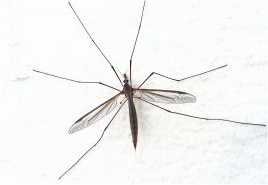 Warm, summer days call for hanging out in the backyard and taking long walks out
in the sunshine...and that means sharing the outdoors with mosquitoes.
Warm, summer days call for hanging out in the backyard and taking long walks out
in the sunshine...and that means sharing the outdoors with mosquitoes.
 There
are other, natural ways that are said to reduce your chances
of getting bit. Aromatherapy
experts suggest essential oils in basil
as a natural cure for related itching and burning. Other sources
claim that eating garlic and boosting your intake of foods containing
vitamin B1 (thiamine). Whether that works or not is up for debate,
but both garlic
and vitamin
B1 are said to boost your immune function so there may be
something to this.
There
are other, natural ways that are said to reduce your chances
of getting bit. Aromatherapy
experts suggest essential oils in basil
as a natural cure for related itching and burning. Other sources
claim that eating garlic and boosting your intake of foods containing
vitamin B1 (thiamine). Whether that works or not is up for debate,
but both garlic
and vitamin
B1 are said to boost your immune function so there may be
something to this.


