 |
||
|
The Feel-Good Guide to Sports, Travel, Shopping & Entertainment
|
||
| Main | Sports Events | Holidays & Observances | Pop Culture | Shopping | Travel |
|
MAIN
Getting Around the London Underground
The London underground system is more than just a public transportation system - it is a cultural landmark with a storied history, a symbol of England's strength and a feat of engineering that defied all logic at the time it was built. The first-ever electrified underground railway, the London Underground has been in service since 1863, when the Metropolitan Line launched. Since then, the system has expanded to include 12 lines and 275 stations. Today, the London underground or "the Tube" is one of the quickest, most efficient metropolitan railway systems in the world. The Underground marker - a red circle with a blue line running through the middle - might as well be the official logo of London and of tourist paraphernalia, with the phrase "mind the gap" almost a catch-phrase for getting around the city. Where do you get off? Famous London attractions & nearest London Underground stations
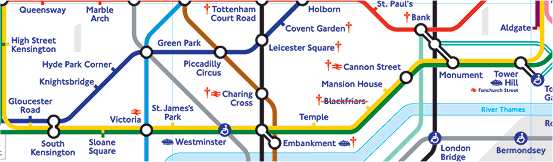
It doesn't take long to become an expert London underground-hopper. Just follow the color-coded lines to well-known stops along the way. One stop at the Westminster station (green or yellow line), for example, will bring you to a treasure trove of London's famous sites including Westminster Abbey, Big Ben, and the Houses of Parliament.
Getting around the London Underground
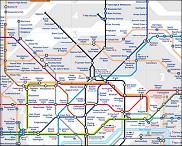
Riding the London underground is simple. There are stops at nearly every corner, and Transport for London offers easy-to-read tube maps and a convenient Journey Planner on its website so you can plan ahead. The lines are color-coded, and, as with most public transport systems, the directions are named after the last station stop. There are several options for purchasing tickets, including single fares, 1- and 3-day passes and season tickets. Most locals purchase a refillable Oyster card, a cheap, reliable option that offers deep discounts on all public transport. For instance, an adult single fare within Zone 1 would cost £4, but with Oyster it only costs £1.50. Plus, Oyster uses electronic price capping to ensure that you never pay more on individual journeys than you would on a day pass. Oyster Cards are available for purchase from London Overground ticket offices; London Travel Information Centres and Oyster Ticket Stops at independent retailers like newsstands or convenience stores. Train fare depends on how many zones you plan to travel across; most tourists will generally stay within Zones 1 and 2. Once you have your ticket or Oyster, you can gain access to the platforms by passing through the electronic barriers in the station. Either insert your ticket into the slot or swipe your Oyster over the yellow reader, find the correct platform and direction for your desired destination and there you have it! Just be sure to mind the gap. London Underground basic information The London underground consists of 12 lines and 275 stations. Trains run between 5:30 and 3:30 a.m. Monday through Saturday and 7:30 a.m. to 11:30 p.m. Sunday. For more information on the London Tube:
About the Author... Jessica Arriola Marati
|