 |
||
|
The Feel-Good Guide to Sports, Travel, Shopping & Entertainment
|
||
| Main | Sports Events | Holidays & Observances | Pop Culture | Shopping | Travel |
Getting Around the Paris Metro
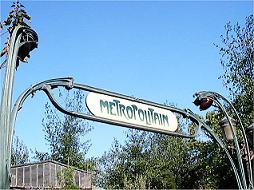
The Paris Metro is everything you can ask for from a public transportation system: clean, cheap, punctual and with around 300 conveniently placed stops across the city (and beyond). It's no wonder most Parisians use it as their primary form of transport. In fact, the Metro is so well-regarded for its efficiency that it has been one of the primary models for urban public transportation since 1900, when Metro Line 1, from Porte de Vincennes to Porte Maillot, was unveiled. Since then, the system has expanded to include 16 lines that cover more than 130 miles. Thankfully, the Paris Metro is also tourist-friendly. Easy-to-follow instructions are posted in both French and English, and station agents are usually available to answer additional questions. The Régie Autonome des Transports Parisiens (RATP), which operates the Metro, offers an easy-to-use itinerary planning tool on its website.
But the best way to navigate the Metro with ease is to be prepared. So here, we offer a short course: • Before you go anywhere, plan your journey using the Paris Metro maps posted in each station. Often, you will have to switch lines once or twice in order to get to your final destination, and a little planning will save a lot of time and confusion. • Paris metro maps are pretty intuitive; each line is numbered and color-coded, and the direction of travel is indicated by the names of the start and end stations. • Purchase a ticket from an automatic machine, station agent, or above-ground general store or café marked tabac. • Standard "T+" tickets and are good for 90 minutes of continuous travel on the Metro, bus, tram and RER (commuter train) systems. A pack of ten, called a carnet, provides great savings. If you plan on using the Metro frequently during your stay, you might consider purchasing a weekly or monthly pass, called a carte orange, or the Paris Visite travel pass, which includes unlimited travel on city transport systems and additional discounts. • Validate your ticket in the slot and go through the turnstile. Don't forget to hold on to your validated ticket; random checks by Metro agents are frequent on weekends. • Follow the directions to your platform and voila! You've successfully navigated your way through the Paris Metro. A final note: you'll notice that the Metro system features a variety of train cars. The most modern cars have doors that automatically open at every stop, but others still require you to push a button or turn a lever upwards in order to enter or exit the car. If you're not sure how to exit, ask for help! Contrary to popular belief, Parisians are always happy to assit a fellow-passenger.
Getting around Paris - Check out tips and advice on using the Paris Metro, buses, RER commuter line and inter-city trains. About the Author... Jessica Arriola Marati
|
 Travel