 |
||
|
The Feel-Good Guide to Sports, Travel, Shopping & Entertainment
|
||
| Main | Sports Events | Holidays & Observances | Pop Culture | Shopping | Travel |
MAIN
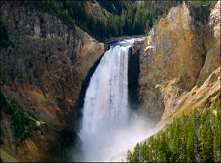
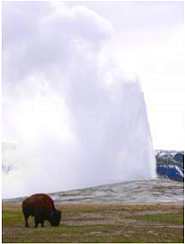
Yellowstone National Park is one of the United States' most visited national parks, and it's also the oldest, established in 1872. Contained within the park, which spans across the states of Idaho, Montana and Wyoming, are awe-inspiring geysers and hot springs, including Old Faithful. The park is also chock-full of wildlife, including grizzly bears, bison, mountain lions, and elk. Getting to Yellowstone National Park Yellowstone requires that visitors pay a nominal fee for park use. Private vehicles must pay $25; motorcycles and snowmobiles must pay $20; and visitors entering the park in other ways must pay $12 each. For frequent visitors, an annual pass runs at $50 and can be purchased at any park entrance. Yellowstone is served by five main entrances. The North entrance is located near Gardiner, Montana, and is open to vehicles year-round. The rest of the entrances are open to vehicles only during the spring, summer and autumn seasons, and operate according to different schedules. The West entrance is close to West Yellowstone, Montana; the South entrance to Jackson, Wyoming; the East entrance to Cody, Wyoming; and the Northeast entrance to Silver Gate and Cooke City, Montana. The closest regional airports are located in Cody and Jackson, Wyoming; Bozeman and Billings, Montana; and Idaho Falls, Idaho. Historic Points of Interest Not only is Yellowstone known for its natural beauty, it also is of significant historical importance. Sites are clustered around the following areas:
Canyon Area: The Canyon Village complex contains the remnants of the old Canyon Hotel and Canyon Lodge, neither of which are still standing. Photos are available in the area's Visitor Center. Grant Village Area: The West Thumb Ranger Station, constructed in 1925, is a good example of historic ranger station architecture. The West Thumb shoreline also contains Native American hearth sites. Lake Area: The Lake Village area contains the historic Lake Yellowstone Hotel, finished in 1891, as well as the Lake Ranger Station and Lake Lodge. The Fishing Bridge, along with the accompanying Museum and Visitor Center, is a symbol of Yellowstone's fishing history. Mammoth Area: Fort Yellowstone, completed over three construction periods at the turn of the 20th century, serves as a visible reminder that parts of Yellowstone were once used for military purposes. Roosevelt Arch, also in the area, was the first major entrance to Yellowstone; its cornerstone was laid by President Theodore Roosevelt during his visit to the park. Norris Area: The Norris Soldier Station was built in 1886 for soldiers guarding Norris Geyser Basin, and was restored as a museum in 1991. Also of interest is the Norris Geyser Basin Museum, one of the park's original museums, completed in 1930. Old Faithful Area: The area around Old Faithful is filled with historic landmarks, including the Old Faithful Inn, one of the few log hotels still standing in the U.S.; the Old Faithful Lodge; Lower Hamilton Store; and Nez Perce Creek Wayside. Tower Area: The Lamar Buffalo Ranch was constructed in the early 20th century to protect the bison herd size in the park. While it isn't open to the public, visitors are welcome to pass by. Also in this area are the Tower Ranger Station, Pleasant Valley, the Northeast Entrance Ranger Station, and the Bannock Trail. About the Author...Jessica Arriola Marati
Yellowstone - Check out the official website from the National Park Service. Yellowstone National Park Lodges - This site provides official information and booking services for all in-park accommodations. Yellowstone National Park - Wikitravel - Get the complete travel guide including what to see and do, major must-see attractions, lodging information, practical travel and safety tips. .
|