|
The Feel-Good Guide to Sports, Travel, Holidays & Entertainment
|

| Main | Sports Events | Holidays & Observances | Pop Culture | Travel |
|
MAIN
For centuries,
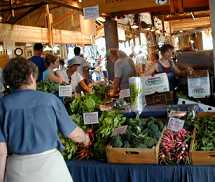
food was traditionally grown and eaten locally, with town
squares filled to overflowing with farmer's produce to lure
neighborhood buyers on market day. Because fruits and vegetables can be grown using chemicals and genetic alterations to keep it fresh, foods can be shipped to markets thousands of miles away. Today it is not uncommon to eat a meal with ingredients from three or four different continents! And yet, while the global market brings greater variety to local supermarkets, an increasing number of wary shoppers have begun to question the price of such convenience. Not only is the global food market a major cause of rampant and unnecessary pollution (as food is shipped halfway around the world), the chemicals and genetic alterations necessary to give it longer shelf life are also being avoided by the health (and taste) conscious. An alternative to buying into the mass production of food has increasingly been the community green markets or farmers' markets located in large cities or suburban areas now cropping up worldwide.
Not only
does the food grown closer to home require little or no additives,
it also saves on fuel energy - and air pollution - that
results from long distance delivery
Local Harvest.org - Comprehensive US directory of farmers markets, food cooperatives, and online sources of organic foods nationwide including related blogs, free newsletter.
|

 The 100
mile diet,
The 100
mile diet,  Where to find farmers
markets in major US cities:
Where to find farmers
markets in major US cities:


