 |
||
|
The Feel-Good Guide to Sports, Travel, Shopping & Entertainment
|
||
| Main | Sports Events | Holidays & Observances | Pop Culture | Shopping | Travel |
Exploring Marseille
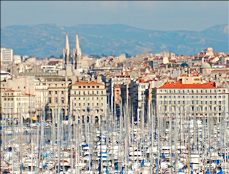
Famed for its soap and its soccer team, Marseille is a gritty port city on the otherwise pristine Côte d'Azur in France. With an economy anchored in fishing and trade and a robust immigrant population, the city is rough around the edges and unapologetic about it. Look beyond its tough exterior, however, and you'll be rewarded with a unique, diverse experience. Marseille history Marseille was founded between 600 and 650 BC by Greek sailors from Phocaea, but prehistoric cave paintings found in the nearby Grotte Cosquer suggest that the area has been settled for up to 25,000 years. The city developed as a strategic port and was later conquered by the Greeks in 540 BC, the Gallo-Romans in 125 BC, the Romans in 49 BC and various barbarian groups throughout the first millennium. By the 11th century, Marseille was a prosperous center for trade and commerce and administrated foreign lands as far off as Jerusalem. In 1481, it was taken over by the French as part of the region of Provence.
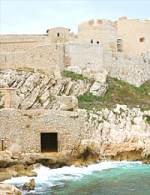
Seeing Marseille While the city is composed of 111 different districts, most tourists won't venture beyond the first, which contains Le Vieux Port (Old Port) and its surrounding attractions. La Canebière is the main artery of the district. Along the heavily-trafficked boulevard lie several attractions, including the Musée de la Marine et de l'Economie (7 La Canebière, 04.91.39.33.33), the Musée de la Mode (11 La Canebière, 04.96.17.06.00) and the informative office of the Marseille Convention and Visitors Bureau (4 La Canebière, 04.91.13.89.00). The boulevard deposits you right on the main port, off which branch several smaller streets filled with restaurants, cafes and tiny stores. Be sure to check out Durance en Provence (40 rue Francis-Davso, 04.91.33.52.47) for perfumes, soaps, food products and other regional specialties. And don't miss Le Pain de L'Opera (61 rue Francis-Davso, 04 91 33 01 05), a patisserie with a dazzling assortment of inventive breads, pastries and macaroons. Other sights that can't be missed? The Chateau d'If, most famous as one of the primary settings of Alexandre Dumas' "The Count of Monte Cristo," is a former prison set off-shore in the harbour of Marseille. The stunning Notre Dame de la Garde basilica, whose architectural style blends Romanesque and Byzantine influences, is set in the hills overlooking the city. And, as with most other French cities, most of Marseille's charm lies in exploring its streets.
Getting to Marseille By air: The Marseille Provence Airport, which is served by a number of commercial and low-cost airlines, is located just a half hour from the city center. Airport shuttles provide quick and easy transfers to Saint-Charles Railway Station. By train: Marseille's Saint-Charles Railway Station is a busy hub for French rail. SNCF runs frequent trains to Paris (3h), Lyon (1h50), Lille (5h20), Toulouse (3h20) and Bordeaux (5h30). By sea: The
Port of Marseille is still bustling as ever. SNCM
ferries offer connections to Corsica, Sardinia, Tunisia and Algeria. About the Author...Jessica Arriola Marati
More about Marseilles tourism around the Web: Things to do in Marseilles - TripAdvisor
|
 Travel