 |
||
|
The Feel-Good Guide to Sports, Travel, Shopping & Entertainment
|
||
| Main | Sports Events | Holidays & Observances | Pop Culture | Shopping | Travel |
|
MAIN
Two to Tango in Buenos Aires
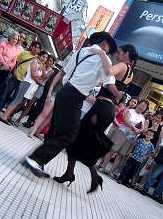
Sexy and seductive, the tango is synonymous with Argentina, and a visit to Buenos Aires isn't complete without delving into this classic art form. Tango dance history The dance has its origins in the immigrant communities that flooded into Buenos Aires in the late 19th century. A mix of the Cuban habanera and the Uruguayan milonga, with European and African influences, the dance is said to have developed in brothels and cafes that catered to the lower classes. In the early 1910s, the dance was introduced to Paris, where it quickly mushroomed into a craze that spread throughout Europe. Back in Argentina, the higher classes adopted a more formal style of tango, popularly referred to as "ballroom tango," and legitimized what was once seen as vulgar. Today, experienced dancers and novices alike flock to Buenos Aires to explore tango culture. There are many ways to experience tango in Buenos Aires; we highlight two of the most popular. Watch a professional tango performance Gran Café Tortoni (Avenida de Mayo 829) is Buenos Aires' most famous café and the perfect venue to catch a classical tango performance. Tortoni hosts a number of shows per night, usually starting at 8:30 p.m. and lasting until midnight. Given Tortoni's reputation, one would expect tickets to be quite expensive, but they are actually affordable, ranging from 40 to 70 Argentine pesos ($10-18 at 3.8 pesos to a dollar) per show. El Querandi (Perú 302) is a historical tangueria whose show, "Nuestro Tango," provides a historical overview of the evolution of tango. The show is divided into five scenes: the Outskirts (late 19th century), the Cabaret (1905-1926), Sung Tango (1917-1935), the Milonga (1932-1955) and Modernism (1955-on). The dinner option includes a three-course a la carte meal and unlimited drinks for US$80; the show option includes a glass of house wine, beer or champagne and a cheese platter for US$50. Attend a milonga - a tango dance hall
Stepping into the marble-tiled Confiteria Ideal (Suipacha 380) is like stepping into another world. This spot is popular with veteran tango dancers, and older couples often arrive to show off their dance skills as early as 3 p.m. Classes are held nightly for 25 pesos. The Centro Cultural Torcuato Tasso (Defensa 1575) hosts one of the longest-running milongas in the city. In fact, many say that this historic cultural center is where the dance originated. In addition to performances by world-renowned tango musicians, Torcuato Tasso also offers nightly classes, at 5 p.m. and 6:30 p.m., with experienced instructors for just 15 pesos. Don't miss the free weekly milonga, held Sundays from 10 p.m. Information El
Querandi Confiteria
Ideal Centro
Cultural Torcuato Tasso About the Author... Jessica Arriola Marati
also see -> Getting Around Buenos Aires Metro
|