|
The Feel-Good Guide to Sports, Travel, Shopping & Entertainment
|

| Main | Sports Events | Holidays & Observances | Pop Culture | Shopping | Travel |
|
MAIN
Greek Orthodox Easter - Sunday, April 20, 2025 The streets of Greece and Greek Orthodox communities throughout the world ring with happy voices sharing "Christos Aneste" ! - Christ is Risen!...
Easter time, from the carnivals that come before the Lenten fast through Holy Week and the celebrations of Easter, is a special season in Greece.
Since the date of Greek Orthodox Easter is based on a modified Julian calendar (while the Western world uses the Gregorian calendar), the festivities sometimes do not occur at the same time as Western Easter celebrations. Sometimes the dates can be more than a month apart. In 2025, Greek Orthodox Easter coincides with Western Easter for the first time since 2017. And while the entire Christian community celebrates Easter on the same day this year, Greek Easter is always marked by unique traditions.
Greek foods and traditions mark the season as uniquely Hellenic. The history of Greece traces back far past the beginnings of Christianity, but from the very earliest days of the Christian faith the Islands of Greece and the Greek people have embraced these beliefs and made them part of the Greek heritage. Of all the Christian feast days, Easter is the greatest time for foods, feasting and celebration to people in the Greek Orthodox faith. The celebrations for Easter truly begin two months before with Mardi Gras. The Carnival or Apokria season starts on the Sunday of Teloni and Fariséou and ends on Shrovetide Sunday with the Burning of the Carnival King...setting fire to an enormous paper mache effigy of Judas in the early evening. The fireworks and feasting continue throughout the night. The next day, Kathara Deftera is known as Clean Monday or Ash Monday
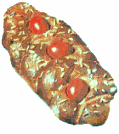
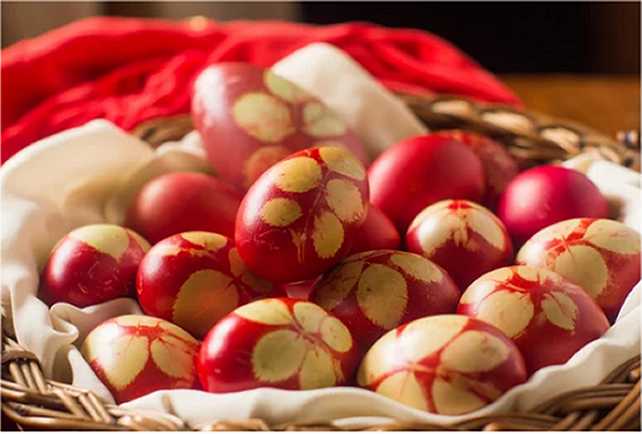
For Greeks, Clean Monday is one of the most festive holidays of the year. Decorated with the colorful local almond trees and mimosas bursting into bloom, nature invites children and their parents into the hills of Athens and the Greek countryside. Flying kites and feasting at local tavernas or outdoor picnics is how Lent begins in Greece. Htapothi Octopus and calamari or squid, prawns, Soupies Giahni - cuttlefish stewed in wine, rice pilaf with mussels, varieties of bean stews and salads are main dishes traditionally served. Lenten dolmades - rice stuffed grape vine leaves, Halva a semolina pudding, plenty of meat free salads and the once-a-year lagana, a yeastless bread, are a small portion of the unique tastes of the day accompanied by joyous music. If Apokria, Kathari Deutara and Lenten Sunday feasts are the preliminaries for Greek Easter, Holy Week is the peak of these activities. On Holy Thursday the bright dyed red eggs that are symbolic of Easter in Greece are prepared. Tradition says that the Virgin Mother, Mary, dyed eggs this color to celebrated the Resurrection of Christ and to celebrate life. Every Greek family prepares these eggs as part of the Easter Sunday Resurrection Table. Otherwise, the women in Greek families are busy baking koulourakia - butter twist cookies and tsoureki - traditional sweet bread for the Easter feast. On Good Friday or Great Friday, flags at homes and government buildings are set at half mast to mark the mournful day. The Procession of the Epitáphios of Christ, the Ritual Lament that has survived from Homeric times, mourns the death of Christ on the Cross with the symbolic decorated coffin carried through the streets by the faithful. On Corfu, the procession of St. Spyridon is held on Easter Saturday. Holy Saturday is filled with anticipation of the religious celebration of Easter and the Resurrection. People begin to gather in the churches and squares in cities, towns and villages by 11 p.m. for the Easter services. Large white candles are carried by just about all of the faithful. At midnight the church bells toll as the priests announce Christos Anesti!...Christ is Risen! Fireworks are set off, in some areas gunshots are fired and the each person in the crowd answers with the joyous responses of Alithós Anésti - Truly He is risen.
The people leave the churches and crowded squares and make their ways to homes of friends and relatives. The candles they carry are placed in each home and burn through the night to symbolize the Light returned to the world. Celebrations continue with the cracking of eggs and The Resurrection Table. The Kokkina - pasxalina avga - dyed red Easter eggs that are found on the Resurrection Table become pieces of a traditional game. Each person takes an egg and challengers attempt to crack each others' eggs. The breaking of the eggs is meant to symbolize Christ breaking from the Tomb. The person whose egg lasts the longest is assured good luck for the rest of the year. The traditional foods on the Resurrection Table: hiroméri - smoked salted pork; cheeses; magiritsa - a creamy, lemony soup made from the lamb sweetmeats; koulourakia - Greek Easter cookies; Tsoureki; Lambropsomo and other Easter breads and plenty of Greek wine, retsina and ouzo insure a feast which will last throughout the night. After the night of feasting and celebration, everyone is still up early on Easter Sunday morning. The Easter Sunday table is prepared and the festivities continue! The Easter meal is truly a feast. Salads of beans, greens and seafood, vegetable dishes that are grilled or cooked to be served with the rice dishes, Kokoretsi, breads, cakes, cookies, wines, ouzo... The main dish at the Easter Table is the Easter lamb or goat (usually kid). Served in honor of the Lamb of God who was sacrificed and rose again on Easter, a whole spiced lamb roasted over a charcoal fire is the most traditional of Greek Easter foods. The Easter Sunday celebration lasts through the day while visits are made to family and friends and the Easter feast is shared with every guest. Each person that enters the home is greeted with Gia to kaló tis iméras! - "For the good of the day!" with a plate of food and an invitation to join in the feast. Besides bringing insult and bad luck to a host who is rejected, the foods are so delicious...who could refuse? Easter Monday is a much more relaxed day when everyone gets ready to return to work and school. The main work of Easter Monday is to finish the foods that were not eaten the day before! Kaló pásha ...Happy Easter! More about Greek Easter around the Web: |