 |
||
|
The Feel-Good Guide to Sports, Travel, Shopping & Entertainment
|
||
| Main | Sports Events | Holidays & Observances | Pop Culture | Shopping | Travel |
|
Main Match Your Skis to the Terrain
Whether you are planning to go to the steeps of Alaska, the deeps of Vermont or the bumps of the West, be sure you have the right ski for the mountain. “Skis are better than they have ever been, making skiing much easier and more enjoyable than in the past,” says Robert Langlois, vice president of ski manufacturer, Head Tyrolia Wintersports. “The engineering, the construction, the materials -- everything adds up to much more fun with much less effort.” Although all-purpose, all-mountain skis remain the equipment of choice for most recreational skiers, today there is also the option of using equipment especially designed for very specific snow and mountain conditions. “If you are planning a trip to the open bowls of Alta, Utah, for instance, look for a short, fat ski,” suggests Langlois. “If you’re heading to the moguls of Mammoth, look for a narrower ski with less shape to it.”
Groomed runs: Skiers who enjoy a nicely groomed slope should try a ski built especially for carving turns. A ski with an exaggerated hourglass shape that allows for quicker and easier maneuvering is perfect for advanced and intermediate groomed runs in Vermont and throughout Colorado and the Sierra Nevada range.
Powder/Open bowls: Heading to the powdery alpine slopes of Fernie, British Columbia or going heli-skiing in the Ruby Mountains of Nevada? Serious powder hounds should look for skis with as much surface area as possible, which allows the skier to literally float on the powder rather than sink into it. Steeps and trees: If you’re an off-trail skier, look for skis with a more exaggerated hourglass shape that will allow for quick turning. Try a ski that is wider under foot (about 85 mm) if you are traveling to resorts in the West, where the depth of the snow and the possibility of pitch are less predictable. In the East, where the snow is tighter and the slopes are less steep, look for narrower skis in the 70 to 75 mm range. Moguls:
Because mogul skiing has become a highly specialized area of the sport, skiers who love the bumps generally have an extra set of skis made especially just for this challenging terrain. Skis & Skiing Equipment - The Mechanics of Skiing - Here's an extensive, illustrated look at how skis are made, along with a a top guide to matching the ski to the terrain. How to Ski Moguls - Check out instructional photo illustrations and expert tips for getting over the bumps.
|

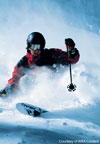 Every year, early snowfalls in the West have skiers across the country dreaming about their upcoming winter ski vacation, and resorts blanketed in fresh powder.