 |
||
|
The Feel-Good Guide to Sports, Travel, Shopping & Entertainment
|
||
| Main | Sports Events | Holidays & Observances | Pop Culture | Shopping | Travel |
|
MAIN
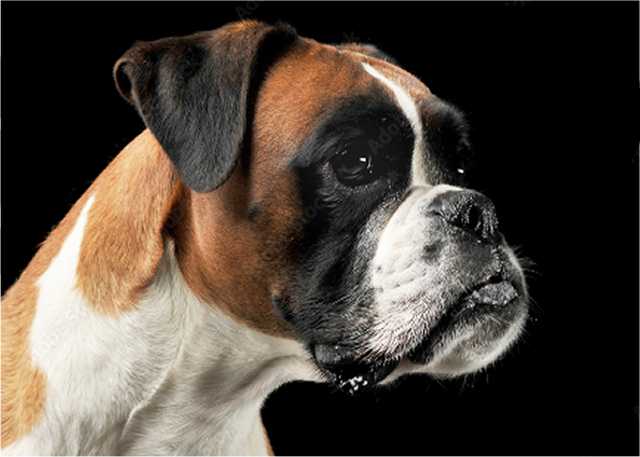
Why the breed is called boxer remains the subject of dispute among dog fanciers. However, the most common theory points to an English derivation of the German word, 'boxl', meaning "short trousers" to describe its color and shading. Yet another popular story points to the boxer's habit of jabbing with its front forelegs while playing or fighting. A boxer by any other name would still be known and admired today for its muscular frame, square muzzle, and pronounced under bite. Its striking appearance, coupled with its energetic personality and utter devotion to its adoptive family, has rightly earned it a place on the Top Ten list of most popular dogs in the U.S.
A strong and confident character, the boxer makes for a great family pet due to its legendary loyalty, talents as a trustworthy watchdog, and utmost patience with small children in their protective care. As puppies, they are noted for taking a longer time to reach maturity than most other dog breeds, and during this time their high energy levels may make them resistant to training. However, rather than harsh treatment, rewards and positive reinforcement usually go a long way in disciplining the naturally rambunctious boxer.
The boxer's short coat does not need as much attention as long-haired breeds, but it will benefit from an occasional brushing to enhance its natural sheen. Major health concerns for the breed include a genetic defect of the heart, leading to a condition called boxer cardiomyopathy which can often prove fatal. Boxers are also prone to a variety of joint and muscle diseases including hip dysplasia and degenerative myelopathy, a form of muscular dystrophy. Less serious conditions include a propensity toward food allergies, bloating and intestinal problems.
American Kennel Club - Boxer - Find out what the judges look for including an ideal boxer description, fun facts & boxer trivia, photo gallery. Worldwide Boxer - Meet an Australian boxer breeder with a detailed and illustrated guide for show dog breeders including boxer standards from around the world, boxer history & origins, famous sires, how to choose a puppy, photo gallery.
also see in Pets -> Dogs -> Beagles Bulldogs | Chihuahuas | Dachshunds | German Shepherds Golden Retrievers | Labrador Retrievers | Poodles | Shih Tzus
|

 A
close cousin to the
A
close cousin to the